Content:
What is separation anxiety?
What events and attitudes in the environment can cause separation anxiety?
How to prevent episodes of separation anxiety?
What is separation anxiety therapy?
What is separation anxiety?
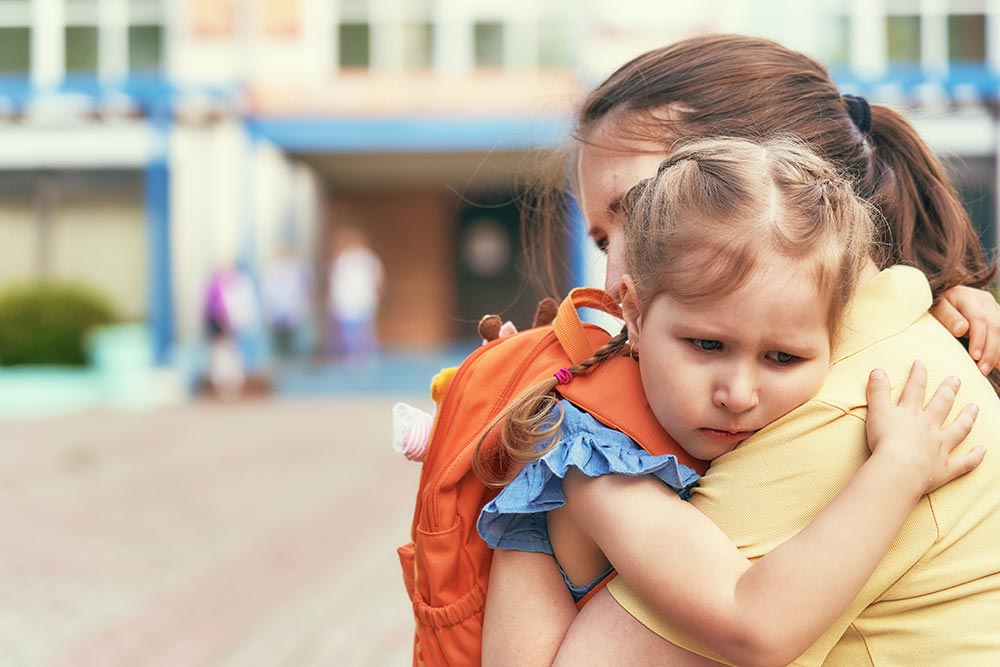
Separation anxiety is one of the types of anxiety disorders in children - chronic and excessive fear associated with separation from a person to whom the child is strongly attached (usually it is a parent, more often a mother). It can also be a fear of leaving the house.
Separation anxiety is developmental - if it occurs in early childhood (ages 6 months to 5 years), lasts for a short time (2-3 weeks) and does not have an excessive long-term impact on the child and family - it is not a cause for concern. It becomes pathological when it persists for many weeks, interferes with the child's daily functioning, occurs in an older child (over 5 years old).
Separation anxiety is often episodic, meaning that it may only occur in certain situations, periodically. It is diagnosed more often in girls. Symptoms of separation anxiety can vary from child to child, with younger children usually showing more symptoms than older children. Compared to other types of anxiety disorders, it lasts shorter, but can be accompanied by a specific phobia or generalized anxiety disorder.
What are the symptoms of separation anxiety in young children?
The main symptom of separation anxiety is the appearance of a very strong protest in a child in a situation of parting with a person to whom the child is strongly attached. Protest can also occur at the mere premonition of parting or when leaving the house (even in the company of parents). The child reacts by crying, screaming, running away, psychomotor anxiety, frantically looking for this person.
The child may also verbalize intense anxiety about losing a loved one or being harmed. They are afraid that something bad will happen that will separate them from their mother, for example, or force her to leave the house.
Because of fear of separation, the child does not want to go (or refuses to go and does not go) to kindergarten/school (or other places without parents), needs a lot of persuasion, or will not stay at home without a person with whom he feels a strong connection.
Very often, children who experience separation anxiety complain of feeling unwell, experience and report physical ailments (headaches, stomachaches), which intensify in a situation of threat of separation. Therefore, for example, before the start of kindergarten, children begin to cry a lot, protest, hide, and start vomiting.
It can also be difficult for a child to fall asleep, especially if there is no close person with whom he has a strong bond. She does not agree to sleep outside the house. She often has nightmares.
A characteristic feature is also the tendency of children to constantly monitor the environment (When are you coming back? Where are you going?), repeatedly asking about the presence of an important person (Will you be with me? Won't you go anywhere? Will you stay with me?).
The inadequacy of the child's reaction to the situation is also characteristic, despite attempts to calm down and the persuasion of the environment (I won't go myself, I won't let you go). The child fixes attention on the problem, at the moment of emotional excitement is not able to perceive logical arguments, enter into a dialogue. She often verbalizes her emotions ( I'm afraid to go there ), but she can't name the reason.
With a significant increase in anxiety, children can even show aggressive and oppositional behavior. Impulsive behavior of a child experiencing separation anxiety is usually a fixed way of reacting to situations subjectively perceived by the child as a threat. Since young children have difficulty expressing negative emotions, they have not fully developed methods of coping with stress, so in situations that are perceived as dangerous, fear manifests itself in the form of negative or even aggressive behavior.
To be diagnosed with separation anxiety, the above symptoms (at least three) must persist for at least four weeks.
What events and attitudes in the environment can cause separation anxiety?
Most anxiety disorders in children are caused by a combination of factors, and we can rarely point to one direct cause. The stimulus that directly causes separation anxiety is most often a specific event that is traumatic for the child (even if, according to an adult, this event is not a trauma).
The most common triggers for separation anxiety include:
events related to the actual or anticipated loss of a loved one (long-term absence of one of the parents, for example, due to business trip, hospital stay, parental divorce, illness or death of a loved one),
significant changes in the immediate environment of the child (for example, moving to a new house, changing kindergarten or school, the appearance of a younger brother or sister or a new partner of one of the parents),
first educational events (going to nursery school, kindergarten, starting kindergarten or first grade),
change in the daily rhythm of the child's life (for example, absence from school for at least a week).
In the mechanism of separation anxiety, the genetic tendency to react with excessive anxiety, the general state of health of the child, the atmosphere in the family, and the attitude of the parents are also important.
Children learn anxious behaviors from their parents just as they learn other skills. Separation anxiety can be caused by the phenomenon of fear induction (vaccination), that is, the unconscious transfer of anxiety to adults - then the child observes and imitates the emotional reactions of relatives in specific situations. If, taking the child to kindergarten for the first time, the mother feels strong fear, she turns to the child with the words "don't worry, don't be afraid, everything is fine, I will definitely come for you", I will miss you, but we will manage" very it is likely that the child will read such a message as - I am in a dangerous situation, you need to be afraid; perhaps the parents do not pick up the child from kindergarten; Mom will miss me and I can't leave her like this.
It is also very important that parents do not reinforce (verbally or non-verbally) the child's fearful or avoidance behavior.
If we pay attention to a fearful child in the wrong way (for example, comfort excessively, promise large rewards for overcoming fear, or, on the contrary, underestimate the expressed fears, criticize him, make fun of him), we unconsciously increase the fear.
It can also be counterproductive to prompt and verbally praise avoidance behaviors. For example, if a parent during a walk repeatedly reminds the child "don't leave me, otherwise you will get lost", then the child will most likely react by grabbing the parent's hand, refusing, for example, to independently explore the playground. Parental praise of this "you're very good" attitude will reinforce avoidance behavior, and the message "I'm only safe with mommy" will become permanent.
It is much better to give the child the message "we make a rule, you can play alone on the playground, but you don't go over the fence and call me when you want to climb that tall ladder" and then watch the child from a safe distance.
It may also happen that the symptoms of separation anxiety presented by the child paradoxically begin to unconsciously bring him some benefit (parental attention, staying at home), allow to influence a certain attitude of the environment. If the way the environment reacts to manifestations of separation anxiety, provides the child's attention, it will help to avoid a difficult situation, will increase this fear.
It is very important that certain factors, situations and behavior of one parent can cause anxiety in one child, and the other child will not react to the same stimuli with anxiety. There are also differences between younger and older children. The risk of having a separation anxiety episode is higher in children who are anxious, have previously experienced separation anxiety, or have a family member with an anxiety disorder.
It should also be remembered that caffeine (contained in Coca-Cola, cold tea, chocolate) can have the effect of increasing anxiety (also separation anxiety) - it stimulates the nervous system, causes rapid heartbeat, anxiety (i.e. symptoms that the child will misinterpret ), as anxiety symptoms). An excess of sugar will have a similar effect (it causes the release of insulin in the body, the sugar level rises, and then drops sharply, which the child may perceive as a feeling of nausea). Symptoms of anxiety also increase with infections, with diseases of the thyroid gland, they can be a side effect of medications, for example, some antihistamines.
The formation of anxiety disorders, including separation anxiety, is also influenced by the modern "plague" - excessive TV viewing, use of phones, tablets, etc. It's not just that a child can watch, for example, a fairy tale in which they are afraid of something, but also that overstimulation of the nervous system increases their susceptibility to anxiety.
How to prevent episodes of separation anxiety?
Preventing episodes of separation anxiety in situations where we expect them to occur (mom going on a business trip, having to stay overnight at grandma's, being in kindergarten, etc.)
If we expect a child to develop separation anxiety, we can use several methods to help them adapt to a new or difficult situation.
The anticipation method consists in providing the child with information, familiarization with the separation situation before it happens. For example, before going to kindergarten, you should show the child the building, introduce the future teacher, give the opportunity to play with peers in the presence of parents.
The step-by-step method consists in gradation of the complexity of the separation situation. First, we practice short separations with the child (for example, mom goes to another room for 5 minutes, then for 10 minutes), gradually longer ones (mom goes to take out the trash). We gradually increase the distance between the mother and the child (at first, the mother stays near the house, then gradually, for example, goes to the hairdresser).
Use of substitutes, amulets during separation - give the child a new talisman before parting, which should replace the parents before his return, leave an object that reminds of the parents (for example, mother's scarf), give a talisman for good luck - reduce anxiety, increase self-confidence.
It is also useful to use "rewards", reinforcing the behavior thanks to which the child managed to cope with the separation. It can be verbal praise, pleasant joint activities (movies, swimming pool), culinary rewards or small material rewards. You can also use the so-called systems of tokens (stickers, chestnuts, pasta) - it is important that reinforcement is given as soon as possible after the end of the separation.
Discouraging the child from behavior of avoidance and escape - avoidance/escape increase the fear of separation, increases the likelihood of repeated protests. If, in the case of a child's sharp protest, the parent gives in, for example, refuses to go out because the child is crying, the child receives feedback that his behavior is effective. Therefore, if we are forced, for example, to sit at home with the child because he vomited all morning, then let's devote time not to entertainment, but to catch up with a book or arrange a situation in which the child will remain at least for a short time without us ( for example, under the care of her grandmother), although she did not go to kindergarten.
The exception is situations when we are completely sure that the child is really not ready for separation, has not coped with it in the past, the discomfort associated with separation has not subsided, and the fear of separation has increased (that is, it has begun to appear in new situations or gain forces).
What else can an adult do?:
try to understand the child's fear,
show methods of dealing with anxiety and other feelings (you can use the help of Mental),
strengthen (in moderation) the child's motivation to fight emotions, remind that fear cannot be overcome immediately, but it is possible (because fear always decreases),
remind the child to use methods that support overcoming tension (visualization, relaxation, breathing exercises, massage, fairy-tale therapy),
to increase the child's sense of security, to make sure that it is important for us to love and accept him (even if we do not allow certain behaviors),
do not comment on the child's emotional problems, especially in the presence of others, do not compare him with other children, avoid unnecessary criticism,
You should definitely not underestimate the child's emotions or deny them (for example, you have nothing to be afraid of!), comment on his problems, embarrass him in front of others, show impatience or draw consequences for the child's fear.
What is separation anxiety therapy?
If anxiety reactions begin to acquire a pathological character (last more than 3-4 weeks, are very strong, disorganize family life), it is necessary to consult the child with a psychologist and/or a child psychiatrist, and if separation anxiety is diagnosed, it is subject to therapy.
The most effective method of treating separation anxiety is cognitive behavioral therapy. The parents themselves must be present at the first meeting with a psychologist, aimed at interviewing and identifying the problem (so that the child does not witness a conversation about his problems). Subsequent therapy sessions involve working directly with the child, but with the parent as a support person (for example, during "tasks" at home).
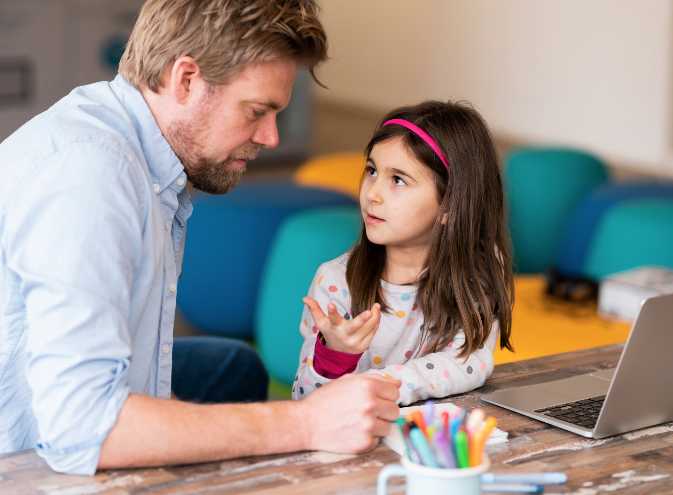
In general, the goal of therapy is to teach the child (with appropriate support) to face the situation that causes fear. The basis of the work is establishing contact with the child so that he feels safe and trusts the therapist. Therapy usually begins with psychoeducation, that is, giving the child knowledge about separation anxiety - story therapy (younger children) or conversation (often with the use of a picture) is used to explain the essence of fear (what is fear, how does it affect our behavior and body, what are its characteristics and how to deal with it).
There is an important principle in therapy: the sooner we return the child to the situation he wants to avoid, the easier it will be for him to overcome separation anxiety. The so-called method is used. Gradual discovery - the child first encounters situations that cause less anxiety, then gradually with situations that cause more and more fear. For this, a "list of fears" is drawn up with the child, that is, a list of situations of separation that cause anxiety of varying intensity, with their detailed description. So-called scaling, that is, a numerical or graphic scale that helps a child determine the severity of anxiety.
Further work is to introduce the following situations from the list (each situation is repeated many times) so that the child, in a safe environment, with the help of an adult and using previously learned methods of reducing tension (eg, visualization, breathing exercises), faces the fear and gains confidence that he can deal with it. During therapy, the child learns to recognize anxiety signals coming from the body, identify thought processes that coexist with arousal, and respond to these signals with appropriate anxiety coping strategies.